The Corner for Migrants' Children
Español

Home

About us

Projects

Context

Support

Links

Press

News

Contact


Support our work

with a donation
   
Educational resource center
Corner for migrants' children
Classic Aztec exports
Youth team training
Living museum  


As the subsistence farming that has been the economic mainstay of our area's families suffers the impact of changes in the global economy, an increasing number of Malinalco's young people find their only real economic alternative is to seek work in urban areas like Toluca and Mexico City and, increasingly, in the U.S.

Young people with children are often under the greatest economic pressure to leave. Yet most are too poor to meet the financial requirements for obtaining a U.S. visa, which include a bank account and a demonstration of property ownership. For those young parents, the journey to cross the border illegally to get to where the jobs are is so dangerous that they do not dare take their children with them. Many migrants feel their only responsible choice is to leave their children in the temporary care of relatives.

Left in the care of relatives – often grandparents who are still raising the younger brothers and sisters of the young people who left – these children must deal not only with the absence of a parent, and sometimes of both, but with the additional stress of not knowing for weeks after their parents' departure whether they have survived the border crossing. With parents absent, these children often assume added family responsibilities, while the other family members who have remained behind must bear additional economic and psychological pressures as they try to manage without the income from the absent relative who is now traveling north and trying to find work. Though family members may expect this situation to be temporary and to lead eventually to improved economic well-being, the transition period of economic hardship, increased family pressures and emotional tensions can last for years, making it difficult for fragmented families to care for the children who have been left in their care by absent parents. Malinalco is experiencing an increasing number of cases where families are left permanently fragmented by the death or disappearance of relatives in the U.S.

A preliminary study conducted by the Corner Project in collaboration with Malinalco's Municipal Department of Education found that 10% of the children in schools of the central barrios had one or more parents in the U.S., while in the municipality's poorer outlying areas 60% of the children had been left in the temporary care of relatives by parents who had migrated to the U.S. There are no current studies to provide more precise local statistics, but the numbers are clearly rising. Teachers report an increase in emotional problems among these children, along with plummeting grades. Children who have trouble fitting in with the relatives they have been left with may move among various families of relatives, changing schools in the process. When this situation is extended for a period of years, the resulting educational difficulties increase the risk that these children will drop out of school.

The severity of the situation suggests an urgent need to provide support for these children and their families now. If we delay, this crucial generation will lose opportunities for the education that is essential in order for them to participate effectively and confidently in the transition to the very different economy that must, of necessity, replace the subsistence farming which has previously sustained the community.

The Corner Project's new initiative, the Corner for Migrants' Children, is developing the following resources in order to provide the support these children need in order to flourish:

  • A small core staff with the teaching and administrative experience needed to manage the resource center and provide on-call educational support for the children throughout the day (schools here are in double session, so this service is needed mornings and afternoons in order to provide this service to children enrolled in both school sessions).

  • Psychological counseling to be provided by a combination of volunteers (psychologists have been the first to respond with offers of support for this project, offering to volunteer weekly or monthly sessions for these children and their families) and young psychologists trained in therapy for children and families in crisis;

  • Monthly workshops to train participating community members in the skills needed to do outreach work with the migrants' children;

  • A group of older students, retirees and other community members who will receive training and compensation for their time doing outreach work, visiting the migrants' children once a week to see how they're doing in their classes and with their homework, providing such practical support as making sure the children have the school supplies and clothing they need for school, keeping records on each child so that problem areas can be noted and referred to the appropriate support person or institution and bringing the children to the resource center for tutoring or other support as needed;

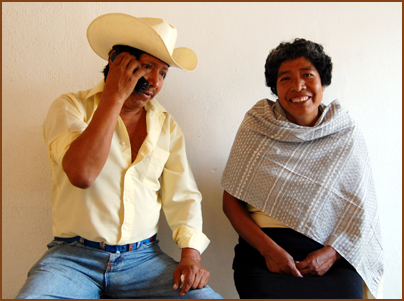
  • Support for communications with migrant family members, providing writing materials and stamps for children to write to parents as well as internet-based inexpensive long distance telephone service, emailing support, and a message reception service for families without telephones;

  • Information and advice for migrants' families in emergency situations.


Support our work

with a donation